Bet Delay Casino Live: Why Does It Lag?
Latency in live dealer games is not random—it is the direct output of a fragmented hardware and network chain, and any operator who blames "the internet" is lying to your face. The moment you tap that bet button, your action travels through a client device, an ISP backbone, a streaming ingest server, a game control unit, and finally a physical dealer's terminal. Every single hop injects delay. The bet delay casino live problem is a stacking failure, not a mysterious glitch.
Most players think lag lives on their phone. Wrong. The real bottleneck sits inside the studio's encoder pipeline and the RNG synchronization layer that governs when your wager is legally locked. 🎯
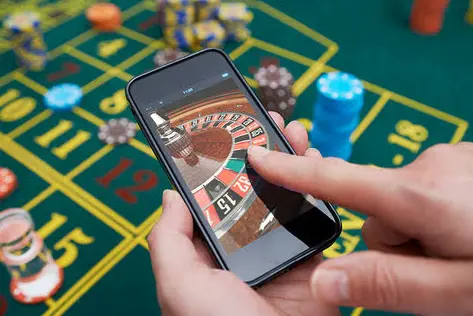
The Hardware Chain Nobody Audits
Live studios run capture rigs fed into hardware encoders—often aging models that add 180 to 400 milliseconds before a single frame ever leaves the building. Pair that with a game control unit that timestamps every bet against a dealer's physical card sweep, and you get a hard floor on how fast your action registers. The live dealer latency figure you feel is the sum of encode time, transport time, and arbitration time.
Then comes the arbitration layer. Your bet must be validated against the round state machine. If the server clock and the client clock drift by even 40 milliseconds, the system throws your wager into a reconciliation queue. That queue is where "bet delay casino live" turns from a nuisance into a real bankroll risk. 💸
Why the Stream and the Wager Disagree
Here is the dirty secret: the video you watch is almost never synchronized to the betting window. Streaming buffers prioritize smooth playback, so they hold frames in reserve. Your eyes see a card flip two seconds after the server already locked the round. Players scream about rigged outcomes when the truth is far more boring—the bet delay casino live mismatch is a buffering artifact, not a cheat.
Operators who shove ten-second buffer windows onto low-bandwidth regions are manufacturing this confusion deliberately. They know a delayed visual makes losses feel like theft. The fix is aggressive edge caching and sub-second keyframe intervals, but that costs money they would rather not spend.

Reading the Delay Signature
You can profile a studio's real health by watching the gap between button press and dealer acknowledgment. Sub-300ms is clean. Anything north of 600ms means the ingest server is choking or the game control unit is overloaded. 1️⃣
Track your own round-trip time across sessions. If the delay clusters around specific tables, the problem is studio-side hardware. If it follows you across every table, your route to the origin server is the culprit. Either way, stop accepting the excuse that lag is unavoidable—it is engineered, measurable, and the operators know exactly where the milliseconds are hiding.